Food security

My ten year old daughter can sometimes feel hard done by. I rebuke her and remind her that she is very lucky. She could have been stuck in rural Africa. The lottery of life has been very kind to her. We are in a secure state, and I’m thankful that mine and my children’s personal safety isn’t at risk.

My five year old is very sensitive. We were watching the news and she saw air strikes. Her eyes filled with tears and she checked that wasn’t near us, then she asked after her Granny. I explained that both her Grandmother in the UK and our family here are all safe.

Maslows hierarchy of needs is a model for understanding behaviour. And safety is vital.

I must say as a mum of young children, I would be very distressed to be displaced.

Sudan has a population of 49.4 Million. 25.6 million people are food insecure. 10.7 Million people are displaced (inside and outside Sudan) since April 2023.

Famine has been confirmed in Zamzam camp, which Shelters hundreds of thousands of displaced people in Sudan’s North Darfur region, as conflict, displacement and humanitarian access constraints have devastating consequences. 13 areas of the country are at risk of famine in the coming months.

The World food Programme (WFP) has delivered life saving food and nutrition assistance to over 7.8 million people since the start of the conflict, including some of the most hard to reach areas in the Darfur region.
Sandalwood

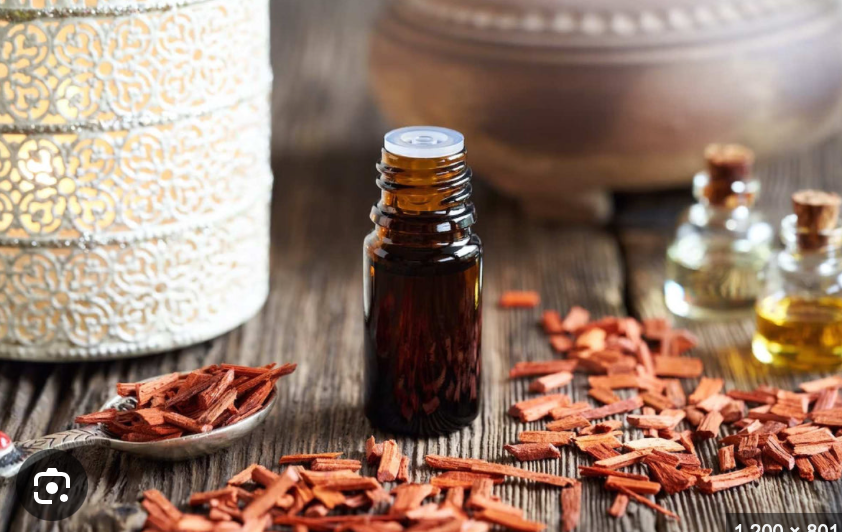
Sandalwood is coveted by consumers. Its oil is native to Australia. According to experts it may become a threatened species.

Sandalwood is used by Aesop and Ester Lauder. Santulum Spicatum is harvested in Western Australia, used in perfumes, incense, cosmetics and other consumer products.

The crop of Sandalwood is 50% Aboriginal owned. It is sourced from plantations, throughout the Wheatbelt of WA.

For the conservation of the crop re-seeding and regeneration programs are necessary. WA sandalwood management programs seeks to conserve, maintain or re-establish self sustaining sandalwood ecosystem’s in the state.

An environmental consultant Peter Robertson states, in addition to over exploitation, climate change and grazing by feral animals were major threats.

National Library

I’m so thankful my children have a religious education. Those with a religious education are exposed to art far more than those without. We are all exposed to beautiful stain glass, statues and paintings. Religious imagery and symbolism is very important and is easy to understand.

At the NSW library in Sydney there is a collection of 300 rare bibles, a few which are medieval. One of the manuscripts was the Book of Isiah the Prophet. It is thought that the manuscript was compiled by Italian monks in the monastery of St Michael, Pisa, about 1225 C.E

The Rimini Antiphonal manuscript is thought to be the finest. It is a illuminated choir book from 1328. The Antiphonal was produced on vellum, it contains 21 decorated initials. Antiphonals are used by choirs and include the chants that are sung during mass.

The bibles have a history. John Rogers, called Thomas Matthew, published the second complete bible in English, the Matthew bible , in 1537. The publishing of the bible was illegal at the time and Rogers was sadly burnt at the stake. Mrs Richardson started collecting bibles because she believed she was related to John Rogers. He was the first Martyr of Queen Marys Reign.

During the first world war some Australian troops were based in the UK , Weymouth. The Richardson’s , who were based opposite the camp, would show the troops the manuscripts.

In 1926 the collection of manuscripts were donated to the Public library of New South Wales to honour the Australian troops who supported Britain in the first world war.

Its is definitely worth a visit to the library, to see this collection. Or if you are studying, recently snacks have been on offer for HSC students. It is a beautiful space to write or research, to work on memoirs or novels.  

Keep an eye on the website; http://www.sl.nsw.gov.au

Shepherding a Childs heart, and ours also;

Jacquie Lambie on Skye news was interviewed about Youth Detention, and also Queensland Premier spoke about Youth Crime. I believe Prevention is better than cure, and a religious education is vital. Parenting is critical, and shepherding our children’s heart. Being law abiding demonstrates our Christian Faith.  

I bought a book about parenting and I wanted to share with you some of its insights. It’s written by Tedd Tripp. Also, the Pope released a long document about the heart, some of which I have quoted.

Proverbs 4:23 instructs us that the heart is the foundation from which life flows.

Parents and teachers have a massive role in Shepherding a child’s heart.

As parents it is important not to get angry, ‘My dear brother, take note of this; Everyone should be quick to listen, slow to speak and slow to become angry, for man’s anger does not bring about the righteous life that God desires.’ James 1:19-20

You must discipline your child in love. Proverbs 3:12 ‘The lord disciplines those he loves, as a father the son he delights in.’ Discipline when done correctly, is an expression of love. It is designed for growth.

The best part of communication is learning to draw out the thoughts of your child. We are, after all, seeking to understand them. Proverbs 20.5 ‘The purpose of a man’s heart are deep waters, but a man of understanding draws them out.’

There are many types of communication with your children, and they include encouragement, correction, rebuke, entreaty, instruction, warning, teaching and prayer. These forms of communicating not only disciplines, it disciples.

Try not to focus on behaviour but rather address the heart. The heart directs behaviour. Behaviour is just a manifestation of what’s going on inside. Luke 6:45 ‘For out of the overflow of his heart his mouth speaks.’

As the Pope says ‘The Word of God is living and active … it is able to judge the thoughts and intentions of the heart’ Heb 4:12. We should use scripture to help Shephard our children.

The Pope goes on to say St Ignatius and his exercises break into our hearts and helps us set our life in order. Our hearts, he says, united with the heart of Christ, are capable of working social miracles.

Under the guidance of Church teaching we can become and bring up peace makers. We can all invest in our community and participate in good works.

Blindness

I’ve recently gone to the optometrist and been given prescription glasses. I find it difficult to read my iPhone. Now they issued some glasses I feel better. But it served as a reminder of my age, and how distressing it is to loose sight. Being a mum of three young children, loosing sight would be disastrous. I suddenly felt more compassion on those that had sight problems.  

It reminded me of the hardship some people face, especially in places when medical care is sparce. And so I looked to the Fred Hollows foundation, and the good work they do. Fred Hollows was an ophthalmologist that started a charity wanting to improve the care of those that are poor, especially indigenous Australians and Torre Straight Islanders.

The figures from the Foundation are confronting. An estimated 36 million people are blind around the world. A further 191 million are visually impaired and 90% of people who are blind live in developing countries.

Tracheoma is one cause of blindness, it can be prevented by access to clean water and improved sanitation. If caught early antibiotics can be given. Later on in the disease surgery is necessary. In 1996, the World health Organisation launched the WHO Alliance for the Global Elimination of Trachoma by 2020. As of 19 March 2024, 18 countries had been validated as having eliminated trachoma as a public health problem. Although this is a success the disease still remains a serious public health concern.

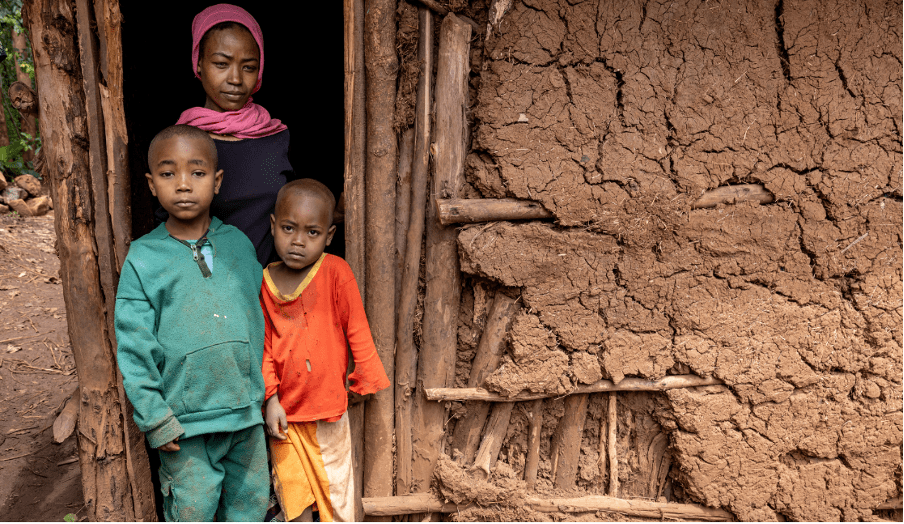
Semira, a lady from rural Ethiopia lives with little access to healthcare. She had an eye infection, and was unable to look after her young family. Thankfully she was not left. A community health worked referred her to The Fred Hollows foundation and local partners where she received the appropriate treatment. Once her sight was restored she was thrilled to see her children’s faces.

“I feel like a curse has been lifted,” Semira said. “Now, I can take care of my children, I can work again, and I feel hope for the future.

Praise God that Semira was treated, and not left alone. The WHO recommends SAFE strategy: Surgery if necessary, Antibiotics, Facial cleanliness, Environmental improvement, access to water and sanitation.

I’ve decided to get a record out and play my girls ‘Isn’t she lovely’ by Stevie Wonder.